
Shot on an Olympus 35 DC rangefinder, made around 1971, on Kodak 400 colour film.
The 35 DC is the rangefinder Olympus built for people who did not want to think about exposure. It has a 40mm f/1.7 F.Zuiko lens, programmed automatic exposure, and almost nothing else to set. Its one concession is a backlight button on the front that opens up about a stop and a half for a subject against the light, which in Hong Kong is most of them. On a bright afternoon the meter sits at the fast end, where the lens is happiest. Kodak’s 400-speed film gives it room to work when a street drops into shade.
Ding Ding
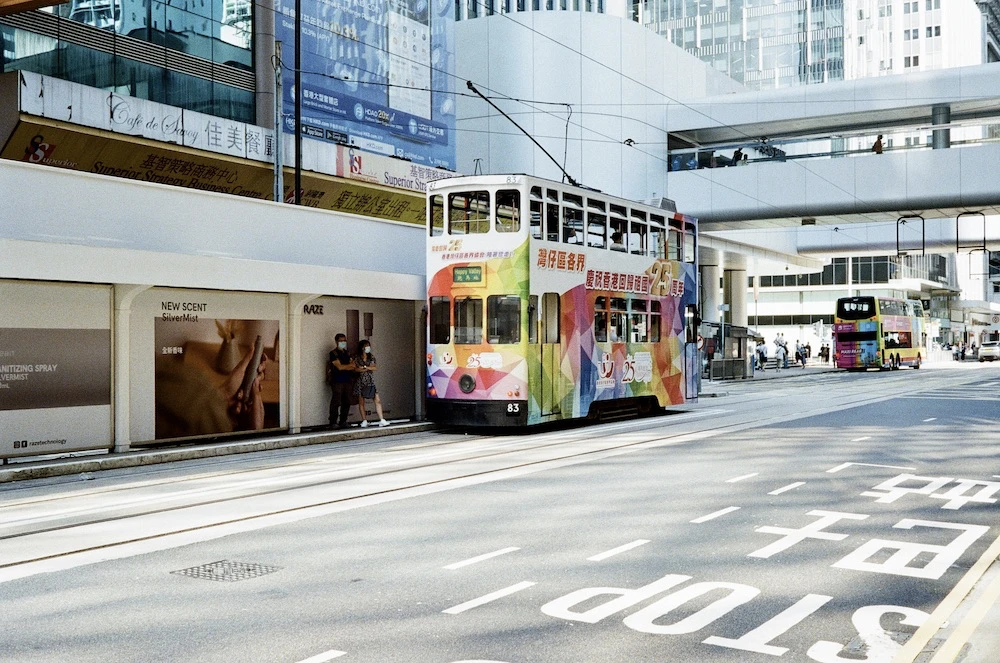
Double-decker trams are unique to Hong Kong. They have run along the north shore of the island since 1904, and the bell that gives them their nickname has not changed.
Fastest Cars in the World
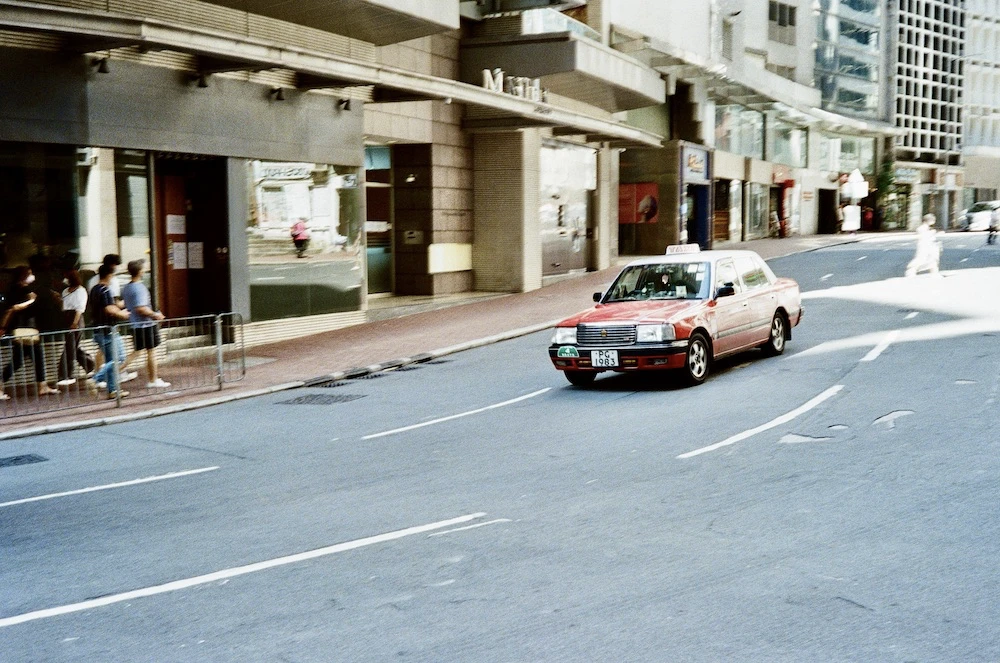
Tell a Hong Kong taxi driver that you are running late and you will be treated to an experience out of Need for Speed. The red ones work the island and Kowloon.
Man Mo Temple
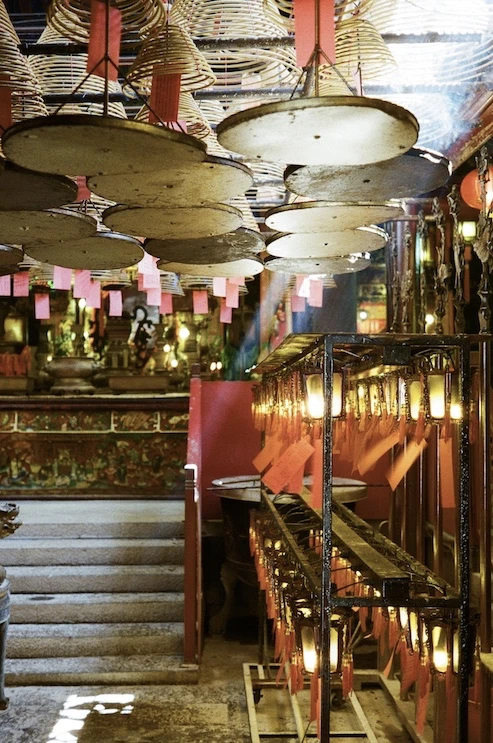
Incense coils hang from the ceiling and burn for days. The 35 DC’s f/1.7 lens is the reason this frame exists at all; the interior is far darker than it looks.
Cha Chaan Teng
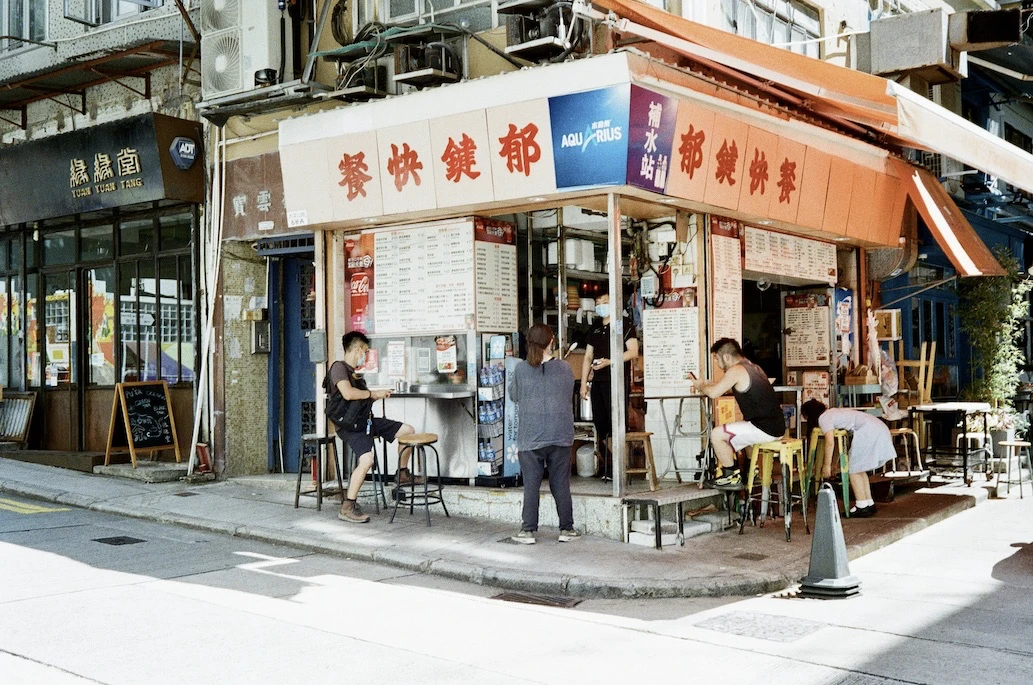
Hong Kong-style cafés that originated in Hong Kong, serving eclectic and affordable menus. Milk tea, buttered buns, and a counter open to the street.
Sheung Wan
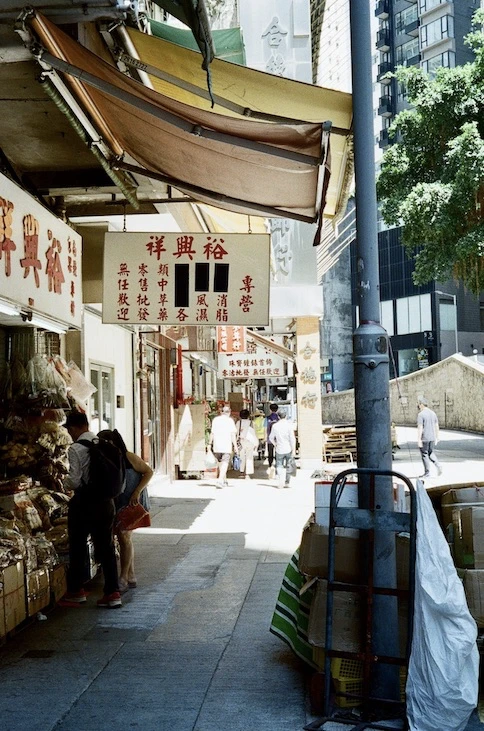
Where the British first settled the island. The dried seafood shops along these streets have been here far longer than the towers behind them.
Sunsets on the Harbour
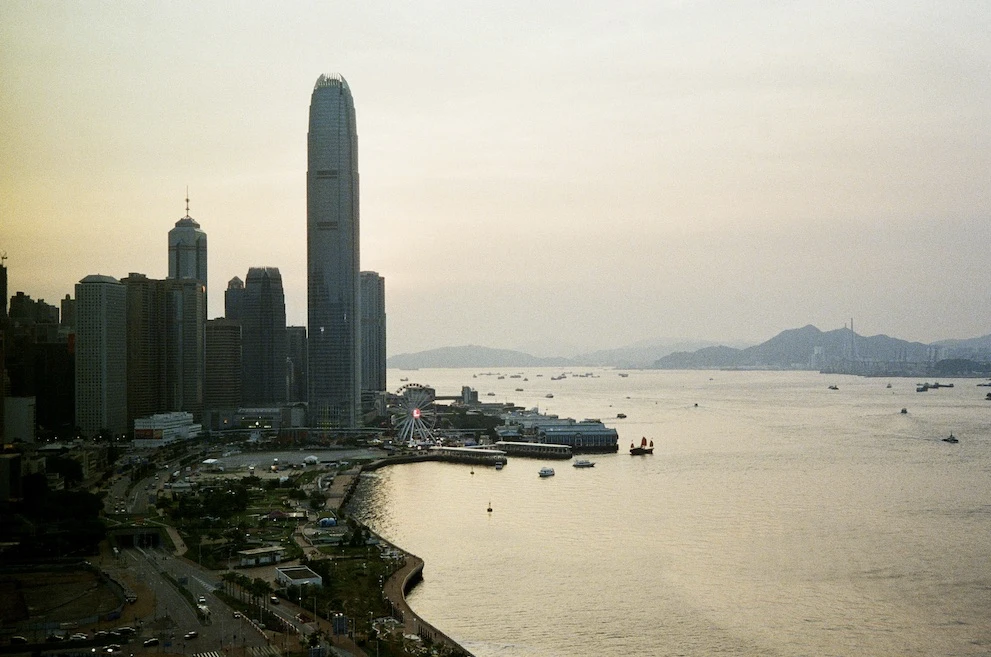
Looking out west, across Victoria Harbour and Central. Shot straight into the haze; the film holds the sky and the water without either going to nothing.
Head on
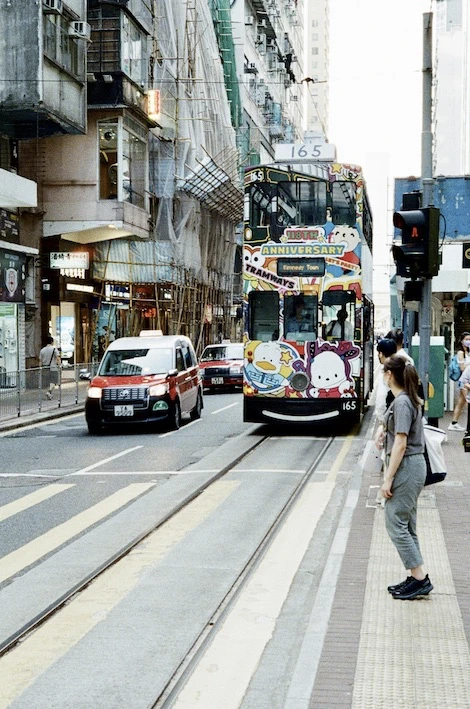
A tram coming straight down the rails, a pedestrian waiting at the kerb.
Shek O Beach
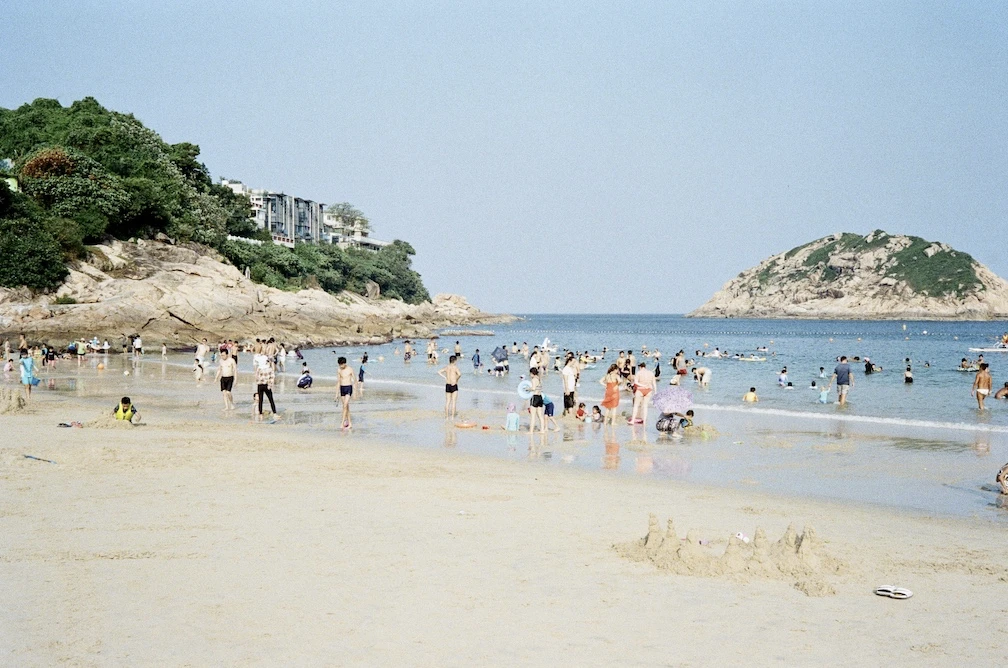
On the far side of the island, half an hour from Central and a different place entirely.
Crossroads
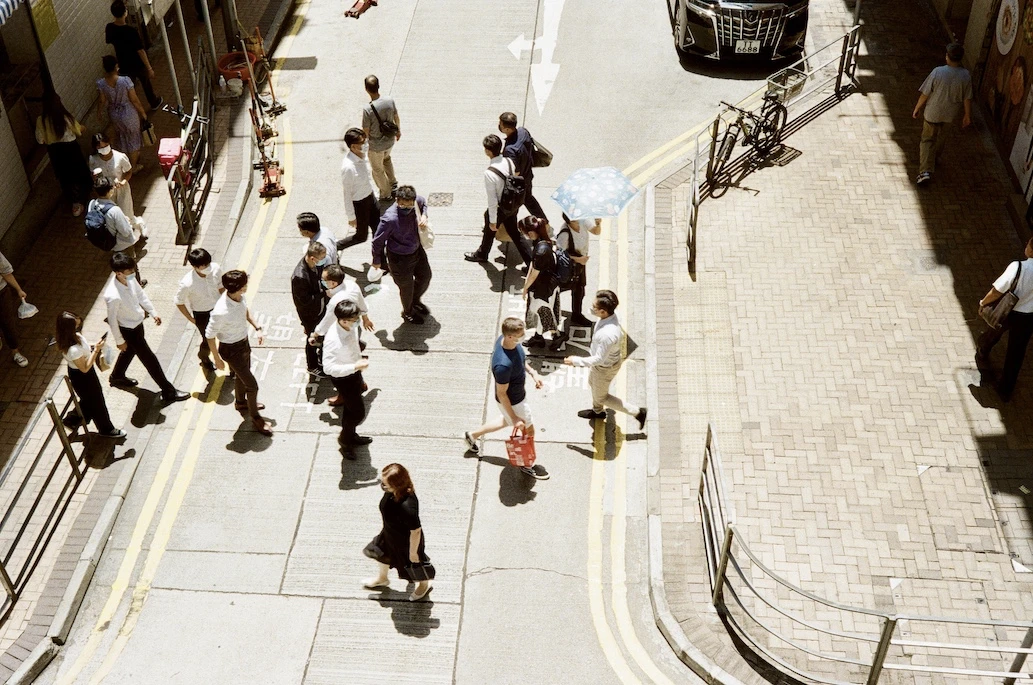
From a footbridge, looking down. Hard light, hard shadows, Kodak 400.
Wan Chai
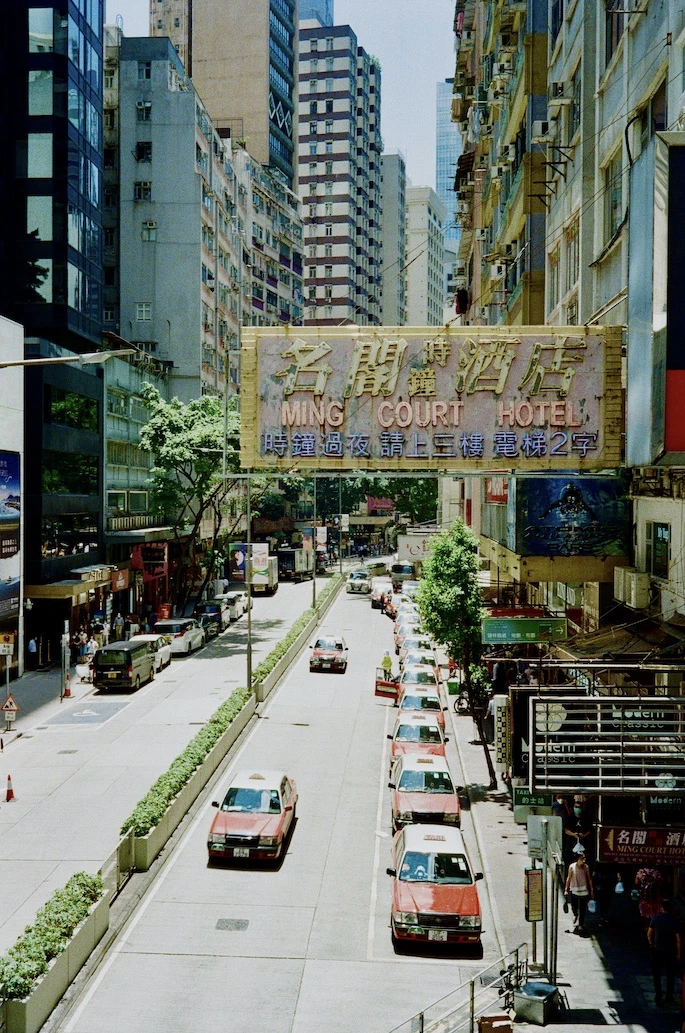
Taxis, signs, and buildings packed close enough to shade the road.
Coffee Shops of Sheung Wan
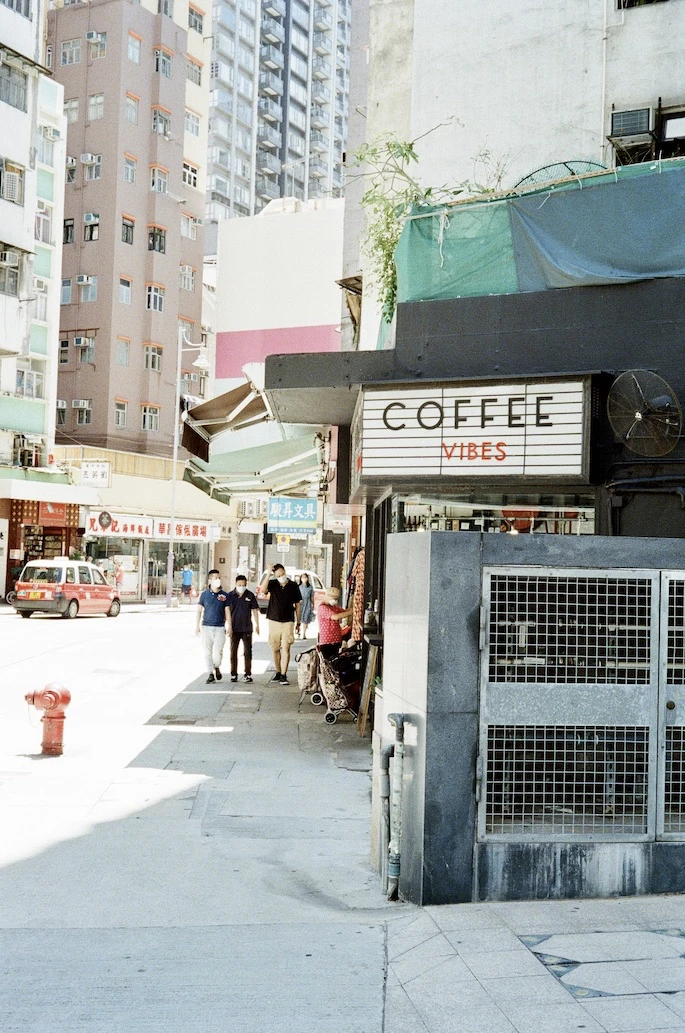
Third-wave coffee has arrived in the dried-seafood district.
East meets West
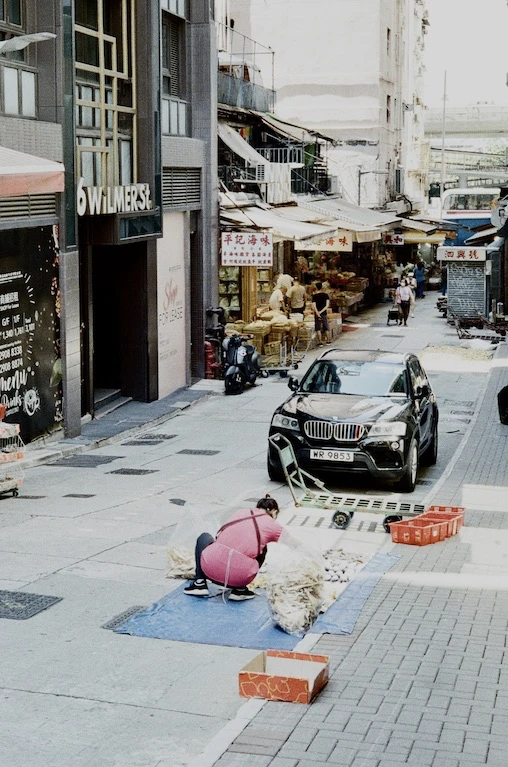
Goods sorted on the pavement beside a parked luxury car, which is about as Hong Kong as a frame gets.
Central from above
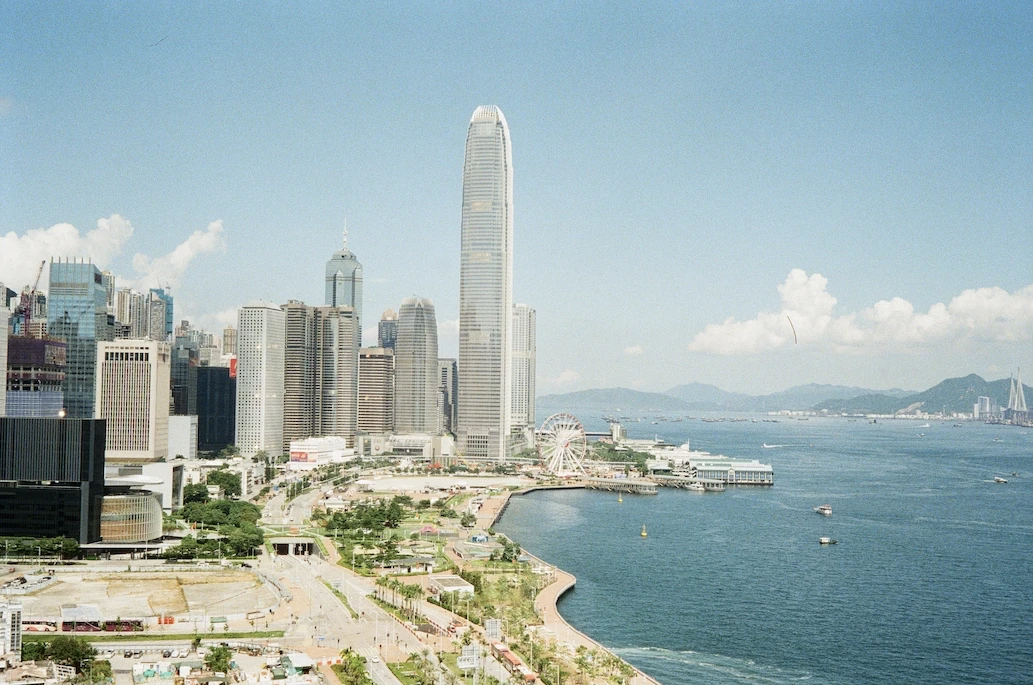
The same skyline as the sunset frame, in full daylight, with the harbour and Kowloon beyond.
Notes on the Olympus 35 DC and Kodak 400
Hong Kong is a hard city for an automatic camera: the streets are in deep shade while the sky above them is blown out. The 35 DC’s meter leans toward the highlights, so the backlight button earns its place on the front of the camera. Kodak’s 400-speed colour film has the latitude to cover the rest, and its warmth suits the city. Red taxis, red awnings and red temple interiors all come out looking the way they felt.