In Hong Kong, the past rarely gets a proper goodbye.
One day a shop is there, the next it's behind a metal shutter. A building disappears, a street changes its name, and life carries on as though nothing happened. This is a city that has always been better at moving forward than looking back.
Few places carry so much history in so little space. From a colonial trading port to an industrial powerhouse, through the 1997 handover and the decades since, Hong Kong has been shaped by generations of people arriving, leaving, building, and beginning again. Its contradictions are everywhere: extraordinary wealth alongside ordinary struggle, old traditions beneath new towers, a fierce sense of identity in a place that never quite stops reinventing itself.
For more than a decade, I've returned to these streets with a film camera. Not to document the changes, but to capture something harder to explain. The feeling of being somewhere that is both familiar and fleeting. A city whose character lives not in its landmarks, but in the countless ordinary lives unfolding between them.
Some of what I photographed is gone now. Other things remain, perhaps for another year, perhaps for another generation. And somewhere along the way, these pictures became less about what I saw and more about what I didn't know I would miss.
Time does something strange to photographs. What once seemed ordinary becomes irreplaceable.
Hong Kong has never been particularly sentimental about its past.
Perhaps that's why I am.
Across the water The Star Ferry and Victoria Harbour
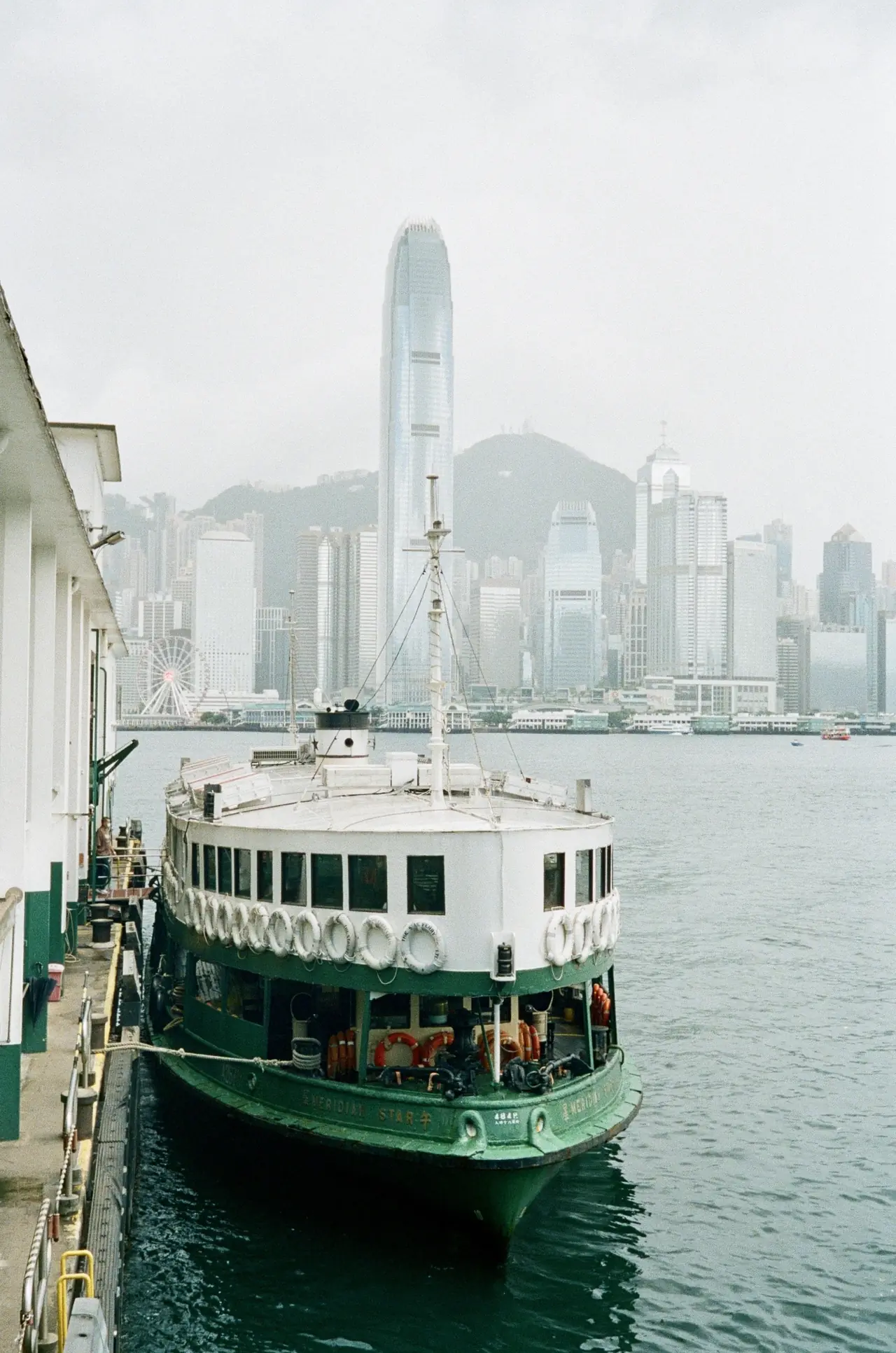
Kowloon on one side, the Island on the other, and the green and white Star Ferries going back and forth between them across Victoria Harbour. The harbour was here before the towers. Start there.
The crossing takes a few minutes, and for those few minutes the rush stops. The benches on the Star Ferry have reversible backrests, so you always face the way you are going.
Hong Kong has a reputation for never waiting. Nobody has told these men.
Still here The wet markets
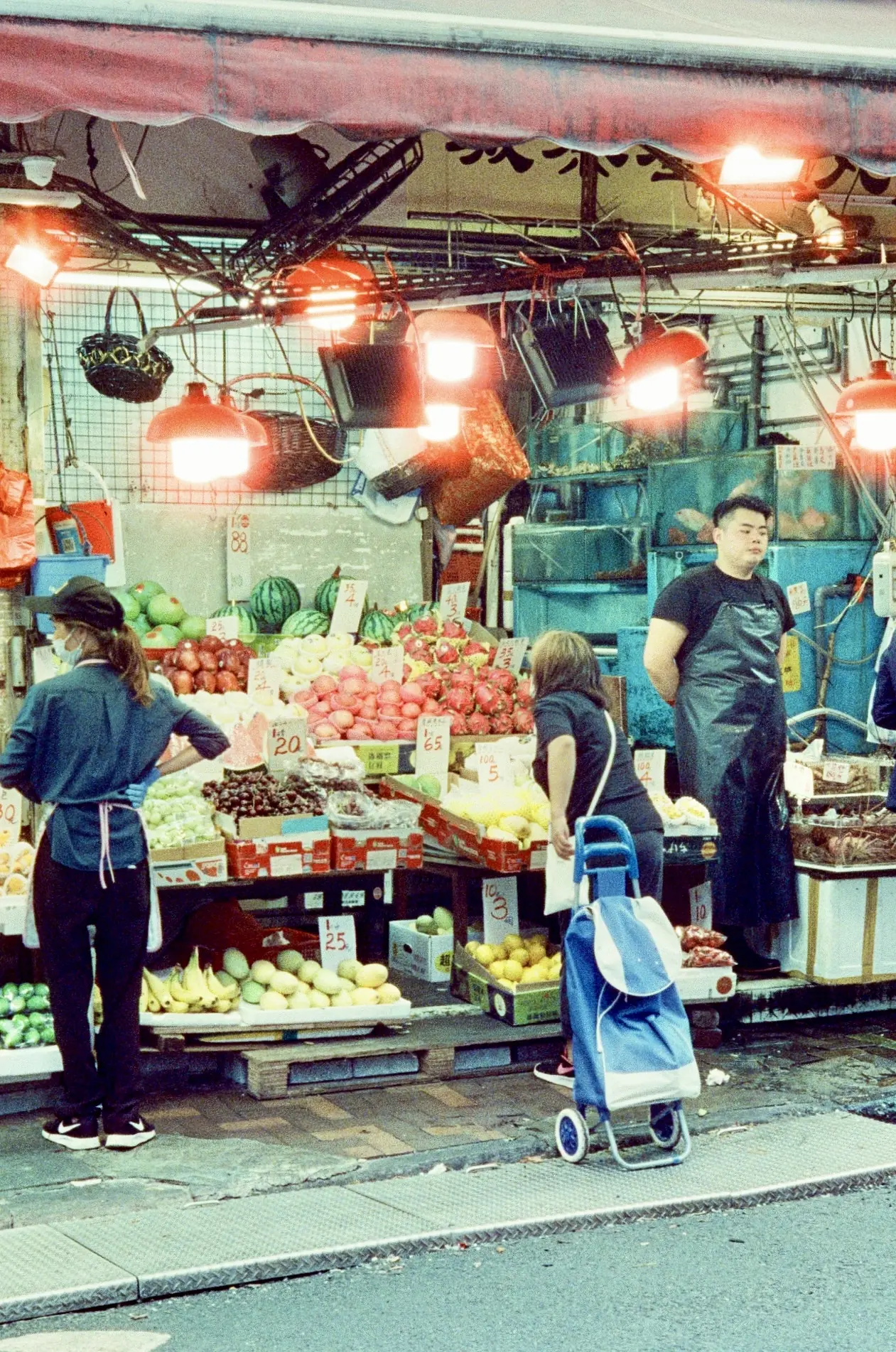
Prices are written by hand and argued over in person. Plastic stools on the pavement, trolleys between the crates. Supermarkets exist. People still come here.
Under the lamp, everything looks fresh.
新鮮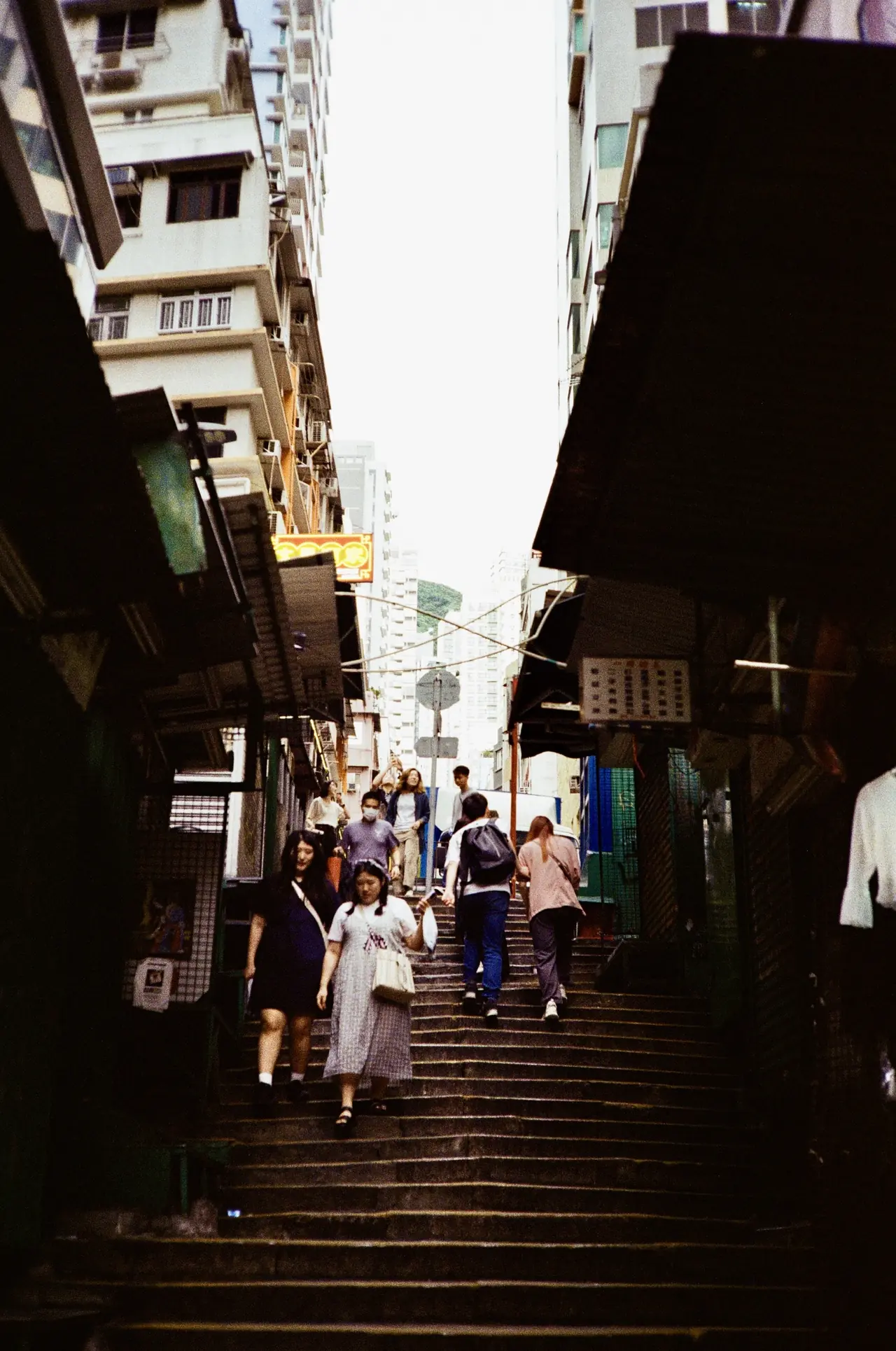
Up and down Stairs, footbridges and bamboo scaffolding
Hong Kong is not flat. Streets turn into staircases, staircases into alleys, and alleys run out under walkways a storey above the ground. You learn to read the slope with your calves.
The city is mostly new, but here and there the old stone shows through: a wall, a set of steps, an arch somebody built long ago that still does its job.
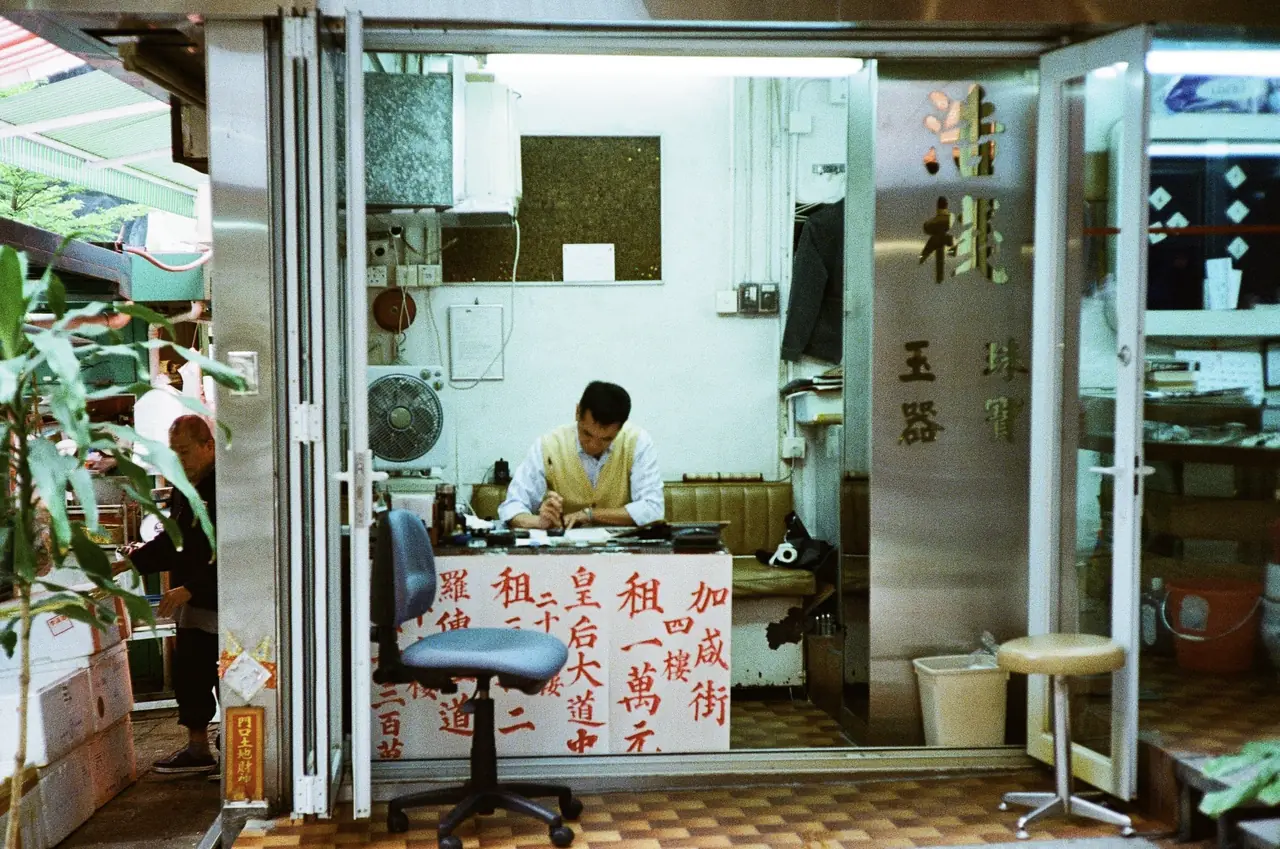
The keepers Old shops, dai pai dongs and cha chaan tengs
Rents are high. Chains move in and the old shops close, one at a time. Walk slowly enough and you will still find some of them: a tailor, a man at his desk behind handwritten notices, a dried seafood shop, a cha chaan teng, a dai pai dong.
The notices on the counter are rental listings, brushed by hand in red: Graham Street, Queen's Road Central, Robinson Road.
When these cooks retire, the stalls go with them.
大牌檔Noodles and sweets, says the signboard.
There is barely a building here at all: a kitchen, a roof and the street.
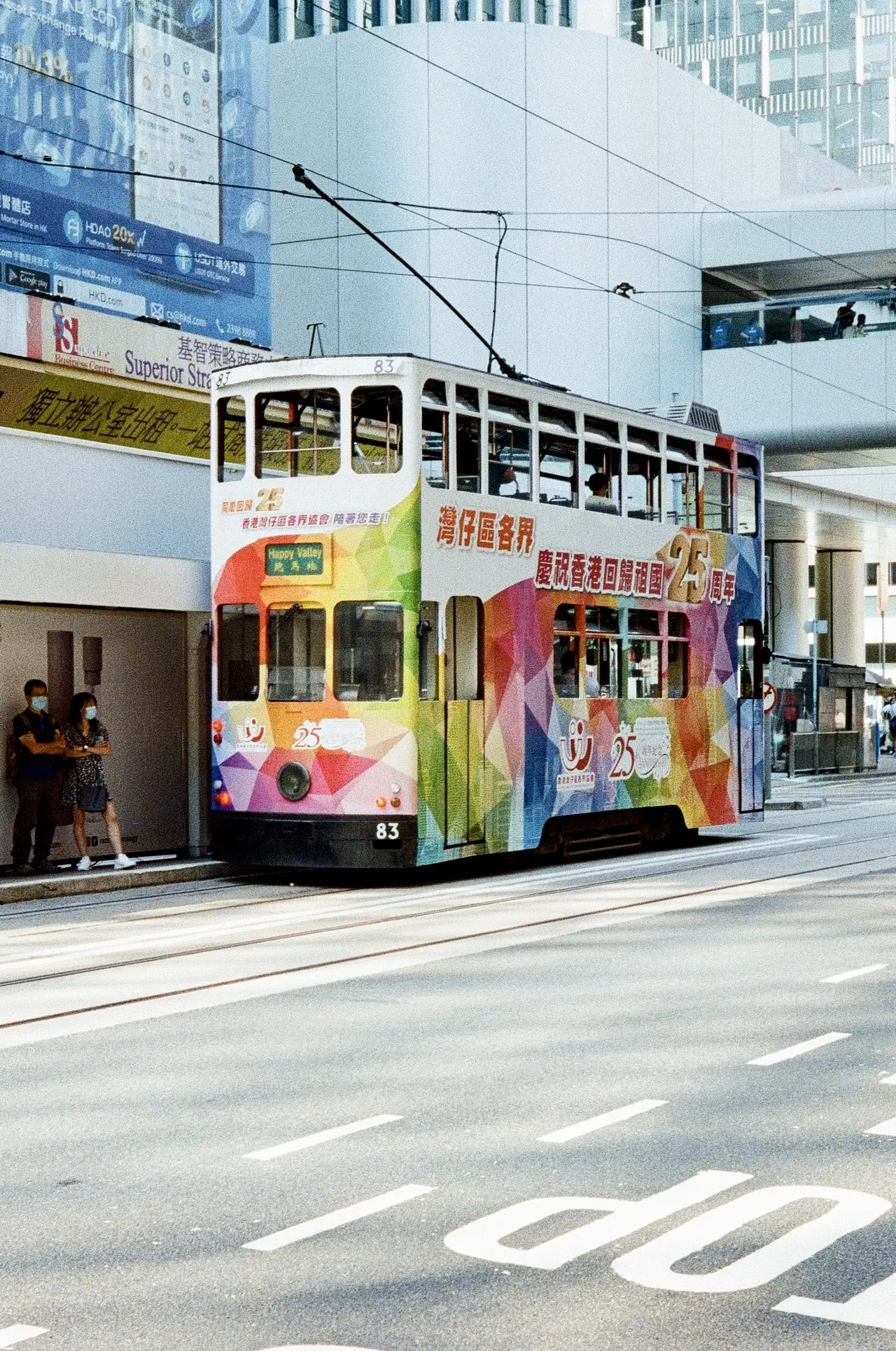
Ding ding Trams and red taxis
The trams have run along the north shore of the Island since 1904. Everyone calls them ding ding, after the bell. They are slow, cheap and narrow, and they share the road with red taxis that are none of those things.
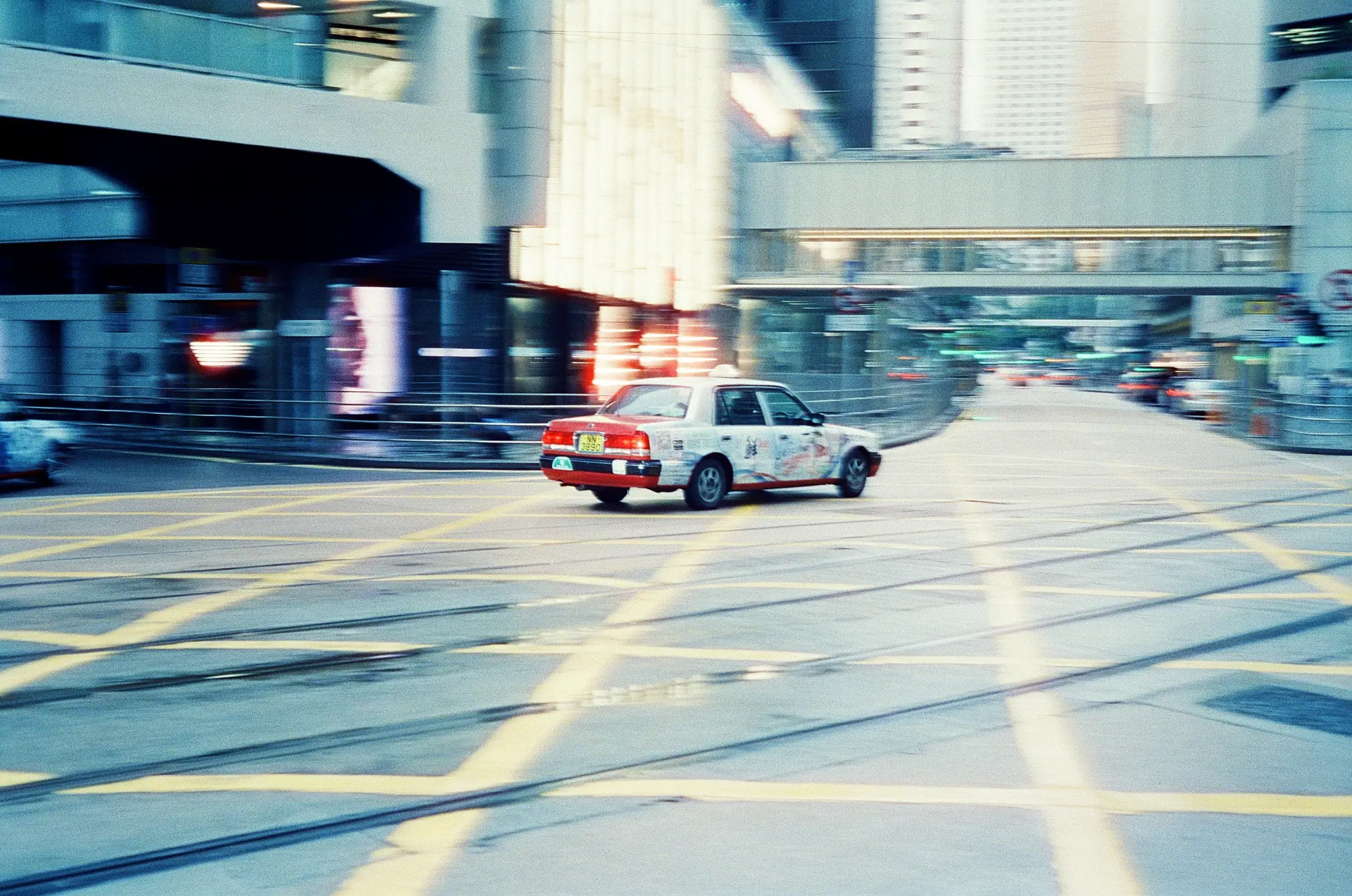
Tell a Hong Kong taxi driver you are running late and you will be treated to an experience out of Need for Speed.
The taxis would not stop for the camera, so the camera moved with them and let the city smear.
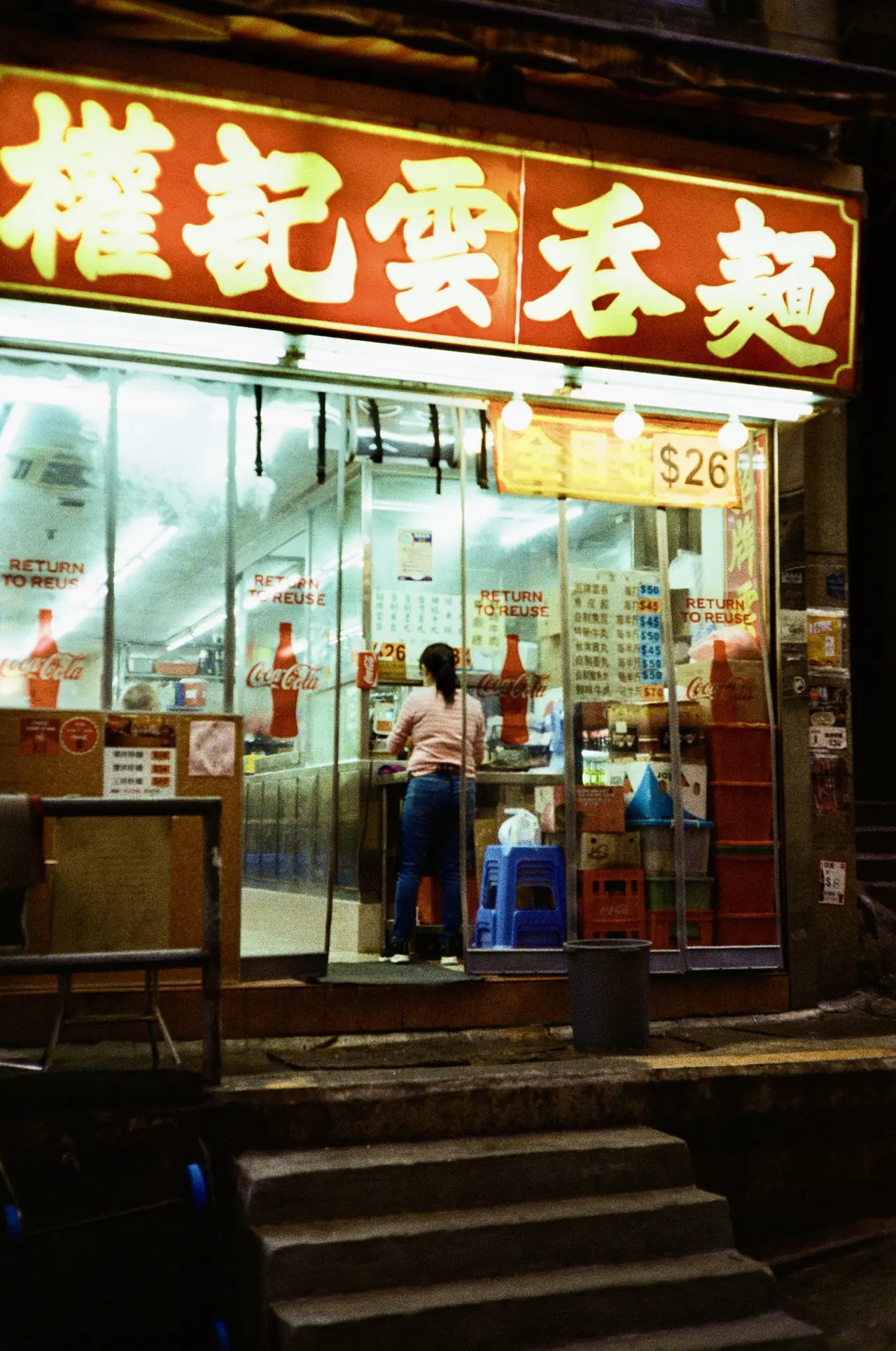
After dark Noodle shops, neon and Man Mo Temple
Most of the big neon signs have come down, declared unsafe or out of fashion. What light is left comes from the shops: noodle counters, roast goose windows, fruit under red lamps. On film, the reds come out the way they felt.
Wonton noodles, says the sign. Fluorescent white inside, red signs outside.
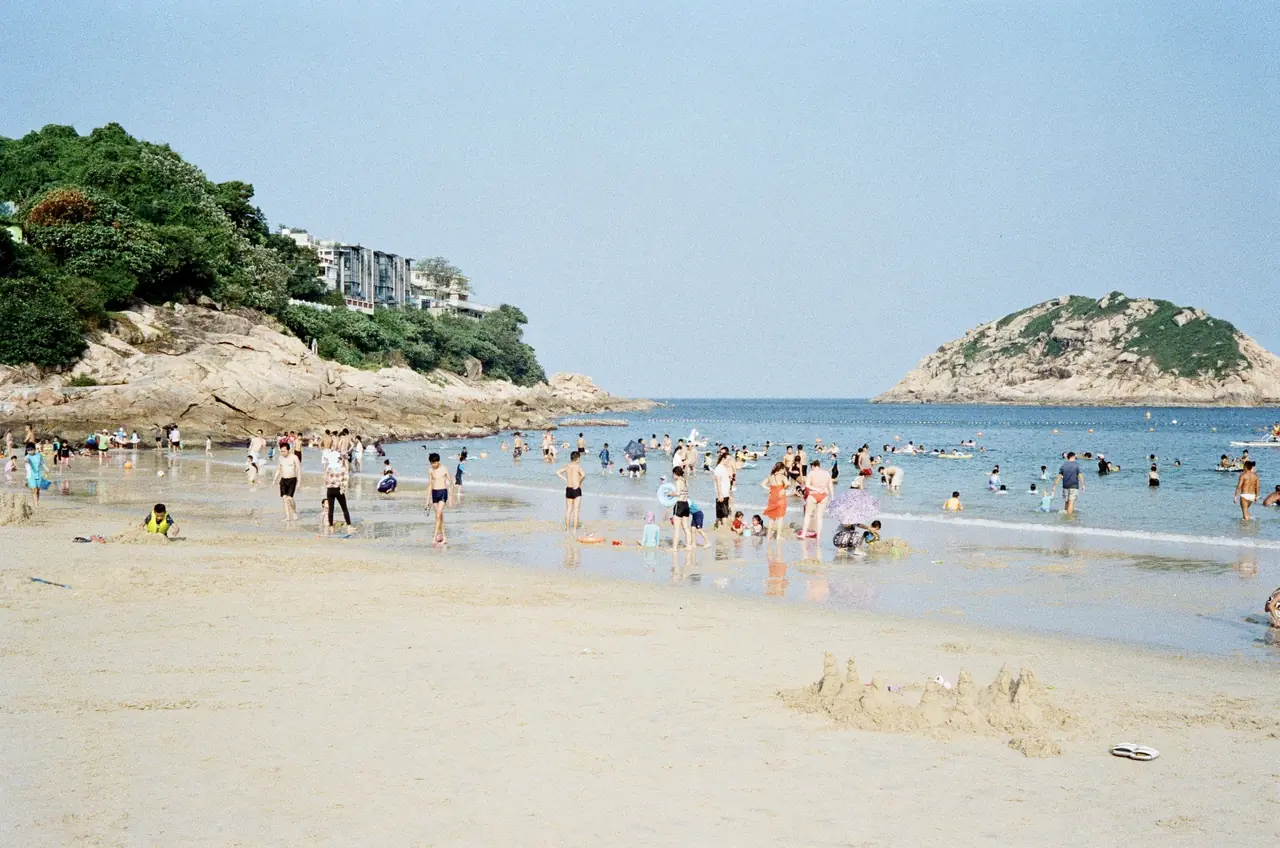
See you again Shek O, and the harbour at sunset
Shek O, on the far side of the island. Half an hour from Central and a different place entirely.
Hong Kong will not hold still. It was never going to.
A film camera is a hopeless way to keep a city: one frame at a time, no second chances, and no way of knowing what you have until long after you have left. But the frames that come back are not of the skyline. They are of a cook under a tarp, a tailor at his machine, a man at his desk with the door open, four people behind a counter waiting for someone to want something. People who were there, doing what they did, on a day that is already over.
The city does not give its past a proper goodbye. These are mine.
Hold still,
Hong Kong.
The journal before this one went the other way, slowly: Not So Fast, twelve days across Ladakh on a motorcycle.